Archives of Anatomy and Physiology
A Quest for Reliable Fixation of In-Bone Implanted Prosthesis
Tufts University School of Medicine, Boston, MA 02111, USA
Author and article information
Cite this as
Pitkin M A Quest for Reliable Fixation of In-Bone Implanted Prosthesis. Arch Anat Physiol. 2026; 11(1): 1-5. Available from: 10.17352/aap.000027
Copyright License
© 2026 2025 This is an open-access article distributed under the terms of the Creative Commons Attribution License, which permits unrestricted use, distribution, and reproduction in any medium, provided the original author and source are credited.Although much is known about total joint replacement, research has had little success in elucidating the genesis of prosthetic stem loosening. The adopted methods of stem fixation include positioning the stem’s shaft inside the bone’s medullary canal and relying on ossification inside the canal in the inward radial direction.
This special communication is to note that the medullary canal’s normal physiology contains obstacles for reliable fixation. The reason is that the ossification of bone walls in the inward radial direction is naturally restricted to protect the needed space for bone marrow. Also, human development and exercise result in a continued increase in the medullary canal’s diameter, which diminishes the reliability of the bond between the canal’s inner walls and the stem with or without cement.
These observations result in the suggestion to utilize the ossification for stem fixation in a different direction, namely, circularly relative to the bone circumference. Circular ossification is a component of the bone remodeling utilized in distraction osteogenesis for bone widening. To induce the circular ossification in the bone walls, we introduce here a stem with new design characteristics to be implanted in specially prepared slots in the bone walls. If verified, this hypothesis could have important implications for orthopaedic surgery.
In the 1960s, Sir John Charnley pioneered modern Total Hip Replacement (THR) [1]. A stem with an artificial femoral head is inserted by its shaft into the pre-bored and cleaned medullary canal of a tube bone, as schematically shown in Figure 1. Either cement is used for adhesion to the walls of the medullary canal, or porous or roughened surfaces are used to stimulate bone growth (ossification) into the stems. THR is widely used in many countries (in the US, about 300,000 hip replacements are performed each year [2]) and proven to be effective, but up to 2% of patients still require surgical revision due to loosening of the prosthesis’s shaft relative to the bone [3]. Loosening occurs when surrounding bone tissues weaken, with the consequent decrease in strength of the bond between the shaft and the surrounding bone’s walls. Another phenomenon which has not been conclusively explained is that younger and more physically active patients encounter a higher risk of future failure of the prosthesis [4]. This fact contrasts with the anticipated positive association of bone regeneration ability with younger age and higher activity level [5,6].
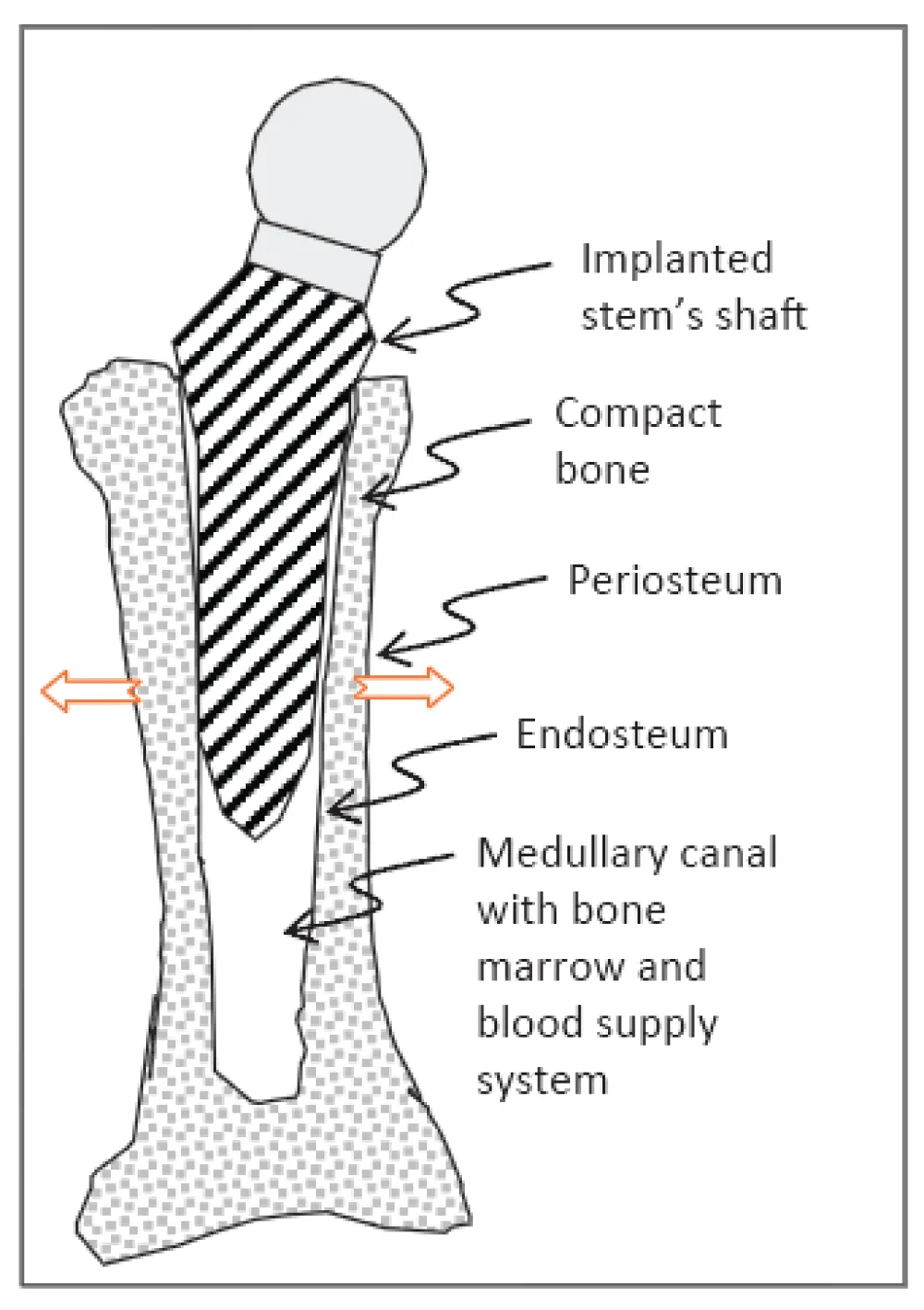
Different theories, including the genome-based theory [7], try to explain loosening of the implanted prostheses, but none can be considered satisfactory [8-10]. A variety of design modifications of the stems have been introduced and examined, including taper slip stems with a polished surface; fixation by intramedullary nails, or the use of high-pressure saline to inflate the diameter of a cylindrical implant [11]. However, all known approaches depend on the medullary canal’s ability to act as a holding cavity for the prosthesis’s shaft. We suggest that such use of the medullary canal not only destroys the endosteum filled with the cortical capillaries that line the medullary cavity, but also contradicts the biological purpose of the canal, namely its role as a designated functional cavity for the bone marrow [12].
Why can the medullary canal not bond well with the implanted stem?
The current philosophy of fixation of the stem in the medullary canal presumes that its walls will eventually tighten around the inserted shaft, similarly to the tightening seen in the jawbone after inserting a tooth implant. We believe that there is an important difference between the interaction of a jawbone and tooth implant and a tube bone with the prosthetic implant. The dental implants replace missing tooth roots, which naturally exist in the jawbone; a natural feature of the jawbone is to keep the root in a firm surrounding. The remodeling of the jawbone is always directed toward the space occupied by the implant and is naturally stimulated in that direction by the loads transmitted from the implant to the bone.
As to insertion of a stem in the medullary canal, it is preceded by boring the canal, partially destroying the endosteum lining the canal’s walls. Even without implanting the stem, the inward ossification in the process of repairing the damaged canal would not go beyond the limit defined by the inner diameter of the canal (Figure 2). No scientific data yet exists on the mechanism that inhibits ossification beyond that limit. But it seems reasonable that such a mechanism should be in place to protect the integrity and normal functioning of the bone marrow.
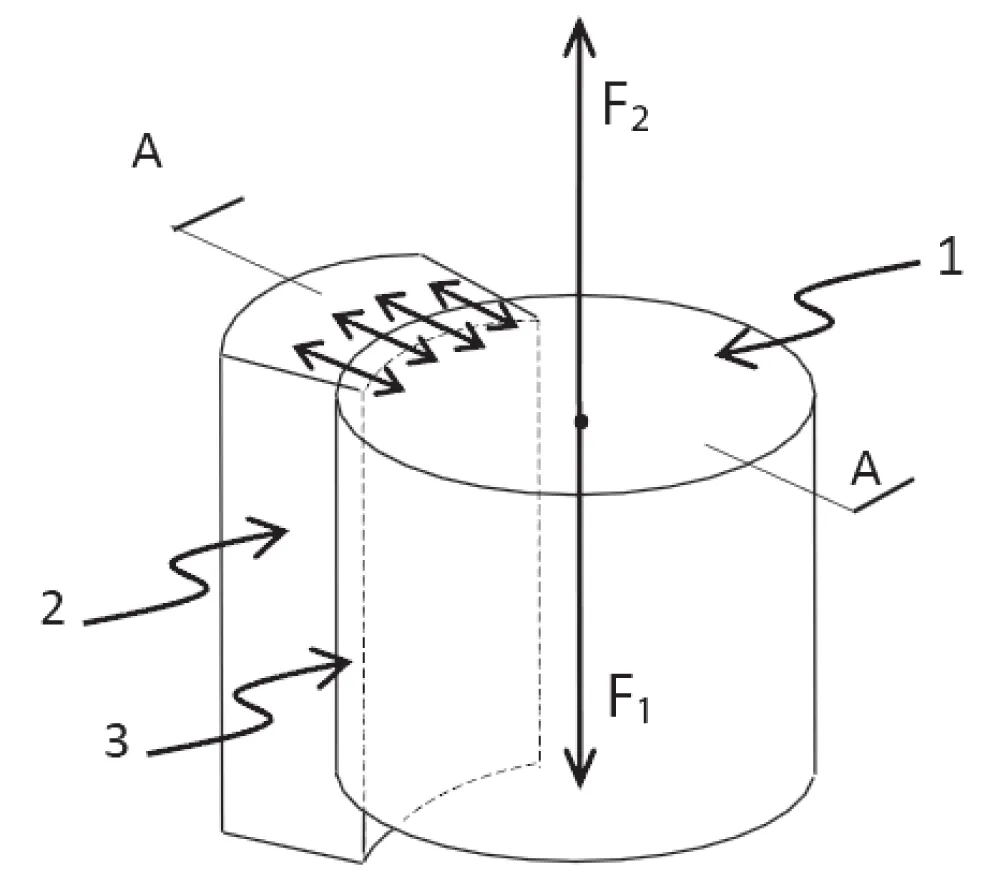
Consider a schematic of the resistance of the bone-implant interface to a vertical load (Figure 2). When the stem is implanted, its stable position is provided by the equality of the vertical load F1 and the reaction F2, which is a resultant friction force between the shaft and the walls. The maximal value of the reaction F2 and consequently the maximal load F1 at which the shaft of the stem does not slide down is a product of a coefficient of friction between the walls of the bone and the shaft, and the sum of normal reactions applied to the shaft by the bone. These reactions are shown in a cross-section AA (Figure 2) as multiple arrows pointing to the center of the cross-section. Normal forces applied to the bone walls from the shaft are shown asmultiple arrows pointing outward. These forces are circularly dispersed and cause ischemia of the bone tissues surrounding the implant [13]. Because of ischemia in the bone wall tissues and the damage to the medullary artery and cortical capillaries in the endosteum [12], the inward ossification may not be completed in a way to reliably withstand the vertical load applied to the implant.
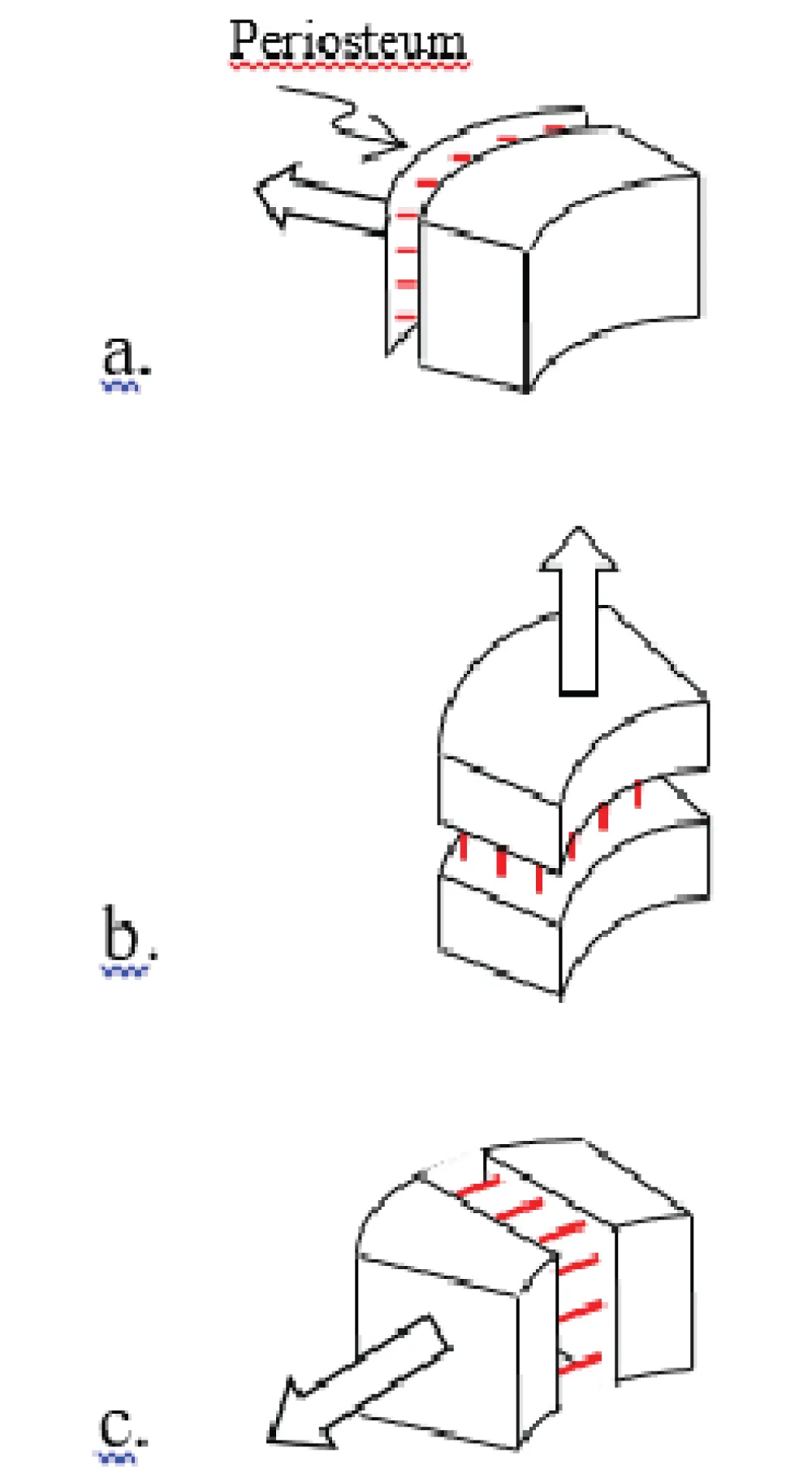
Another fundamental reason why the medullary canal is not a reliable holding cavity for the stem’s shaft is that it increases in diameter when a person is in a developmental age or has a high level of physical activity [14]. The pull-out action of the skeletal muscles applied to the periosteum prompts bone ossification in the outward direction and an increase in the bone wall’s thickness (Figure 3a) with the concurrent increase of the canal’s diameter. We consider the process of canal widening to be the second reason for the loosening of the bond between the bone walls and the stem in THR patients. Therefore, the hypothesis is that ossification in the direction of the center of the medullary canal can not provide reliable locking for the prosthetic stem.
Osseolocking approach
According to the hypothesis stated, if circular cortical ossification instead of radial endosteum ossification is utilized, a more reliable fixation of joint prostheses may develop.
The phenomenon of circular lateral ossification is not new, constituting a component of the bone distractional osteogenesis introduced by Dr. Ilizarov [15]. The method allows for bone lengthening (Figure 3b) and widening (Figure 3c) when the bone fragments are moved apart approximately 1-2 mm per day in a fixating apparatus [15]. It is important to note that the volume of ossification in the circular lateral direction during bone widening is comparable to that during bone lengthening [16]. However, this technique of induced ossification has never been applied to lock devices implanted in the medullary canal.
Stem design recommendations
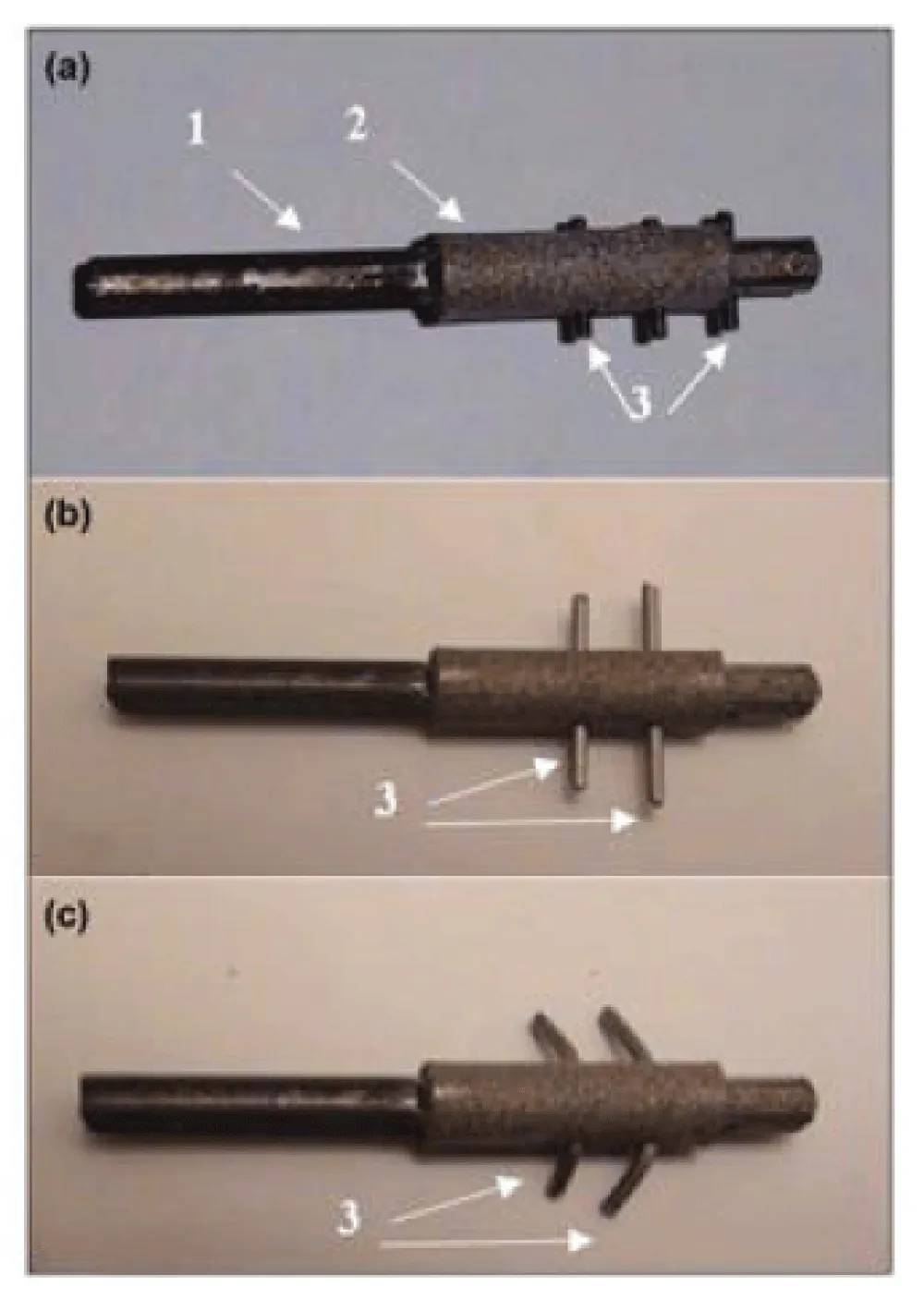
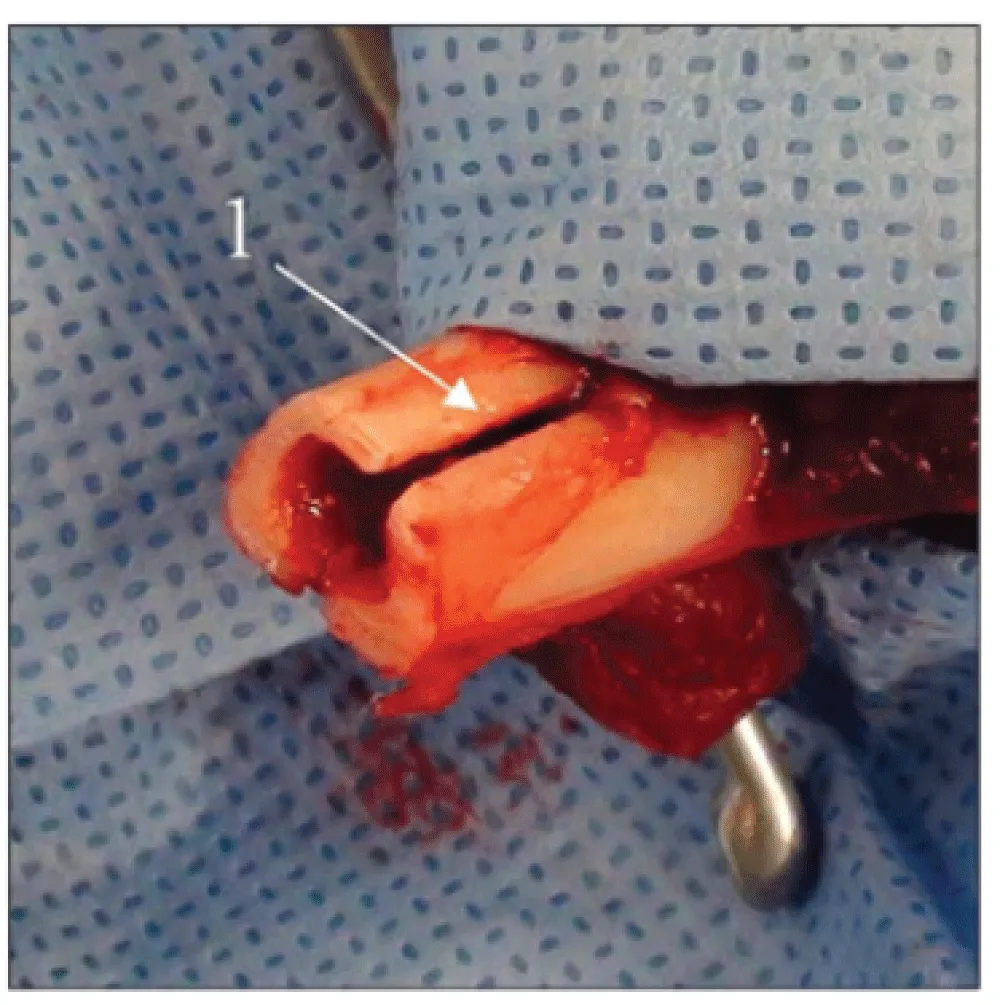
We suggest the creation of favorable conditions for the ingrowth of bone cells for locking the implant by employing the mechanism of distraction osteogenesis in the circular direction. Zones of ossification will presumably produce the effect of “osseolocking” between and throughout the sides of the implanted part of the prosthesis’s stem (Figure 4). To initiate the effect of osseolocking, bone preparation should include fashioned slots in the bone walls in the longitudinal direction [17]. The protruding sides of the installed implant are positioned in the slots, and the ossification between and throughout the side elements (fins) will progress in the circular lateral direction.
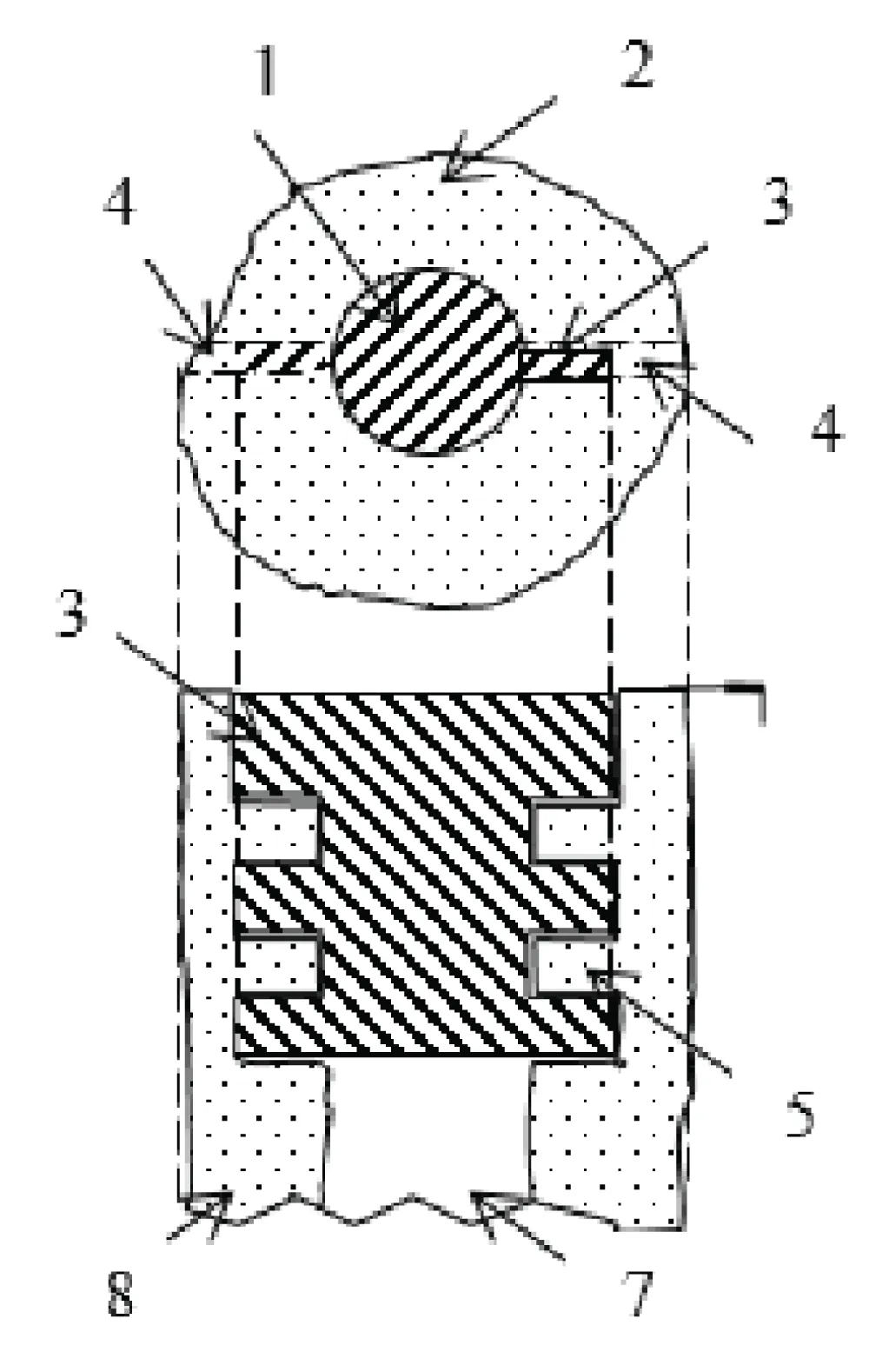
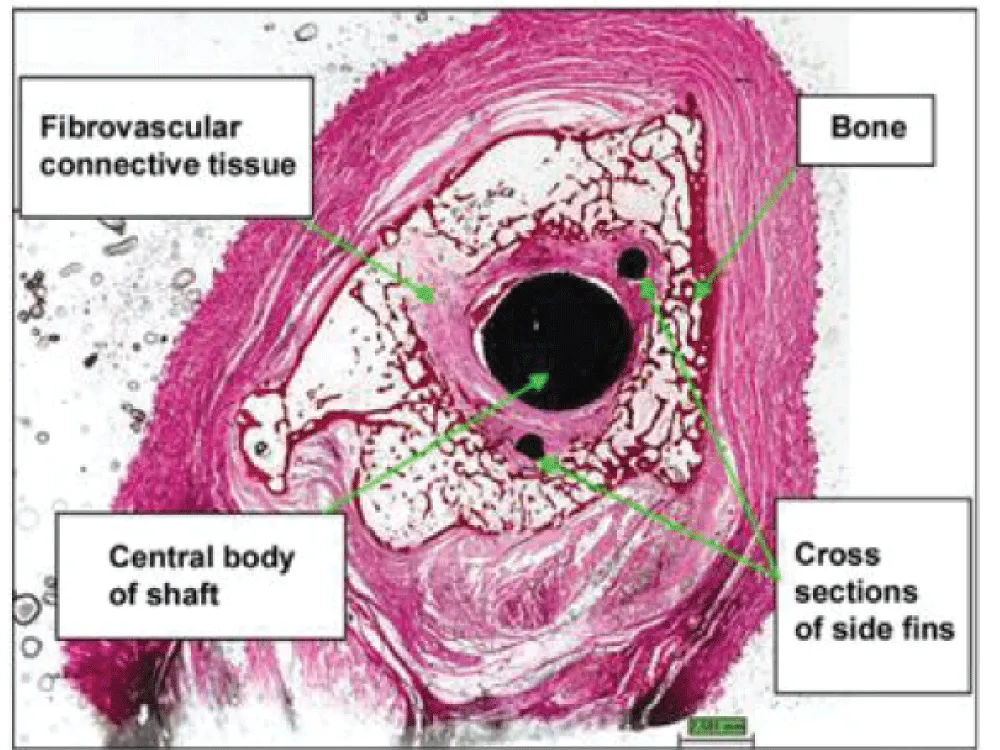
The partially sectioned side view and the top view of the bone with the implant containing side elements (Figure 4) show newly ossified zones of the bone’s walls and demonstrate how the device is integrated with the bone at the end of the healing process.
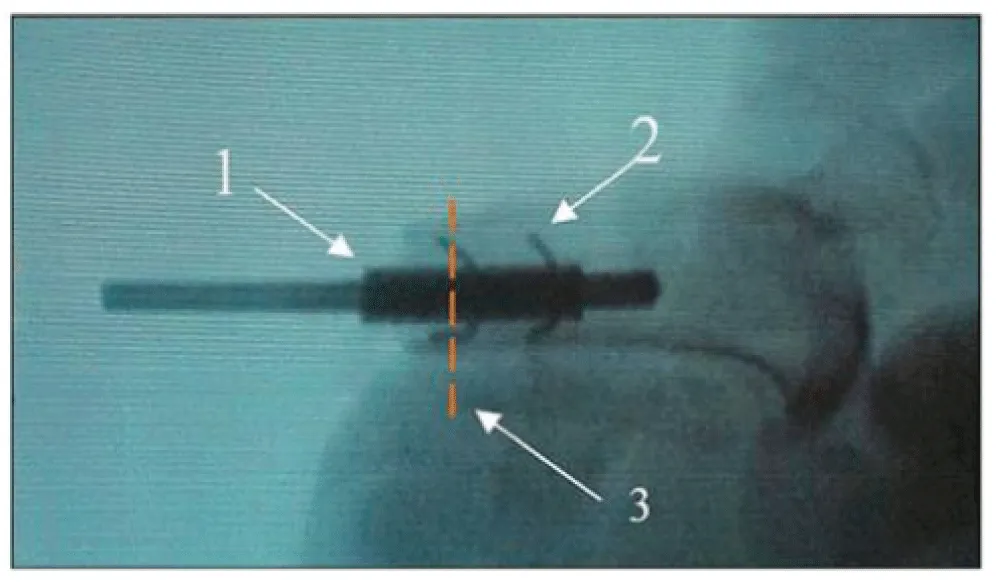
During our animal study [18], the healing process, as we anticipated, naturally locked the implant with an anchoring effect similar to that of the interlocking nailing, as illustrated in Figures 5-8, but without its typical complications [19].
Discussion
Considering the gravity of the medical consequences of prosthetic implant loosening, we question the philosophy of the device-bone interface. We view as ineffective the approaches based on the placement of the stem in the bone’s medullary canal, and therefore requiring strong ossification inside the canal in the inward direction.
Frequently, the medullary canal placement of the implant is used in total joint replacement. New technologies emerge that also use the medullary placement of the implants. One of them is associated with the creation of artificial humerus condyles to improve the socket attachment to the conical amputation residuum [20]. Another technology, direct transcutaneous prosthetic attachment called “osseointegration,” was introduced in the nineties [21]. The purpose is to eliminate or avoid pain and discomfort associated with the traditional residuum-socket attachment of the external prosthesis to the body. According to the current technique of osseointegration, a titanium fixture is inserted into the bone remnant of the residuum, and a skin-penetrating abutment is used for attaching the prosthesis [22]. While the skin-device interface presents the obvious challenge in avoiding infections [23], the bone-device interface is a parallel critical issue affecting the wide acceptance of osseointegration in the future. The fixture is implanted into the medullary canal, and therefore the longevity of a device-bone bond depends on the inward ossification as in the total joint replacement technique.
Attention to the natural anisotropy of tissues grows, and regeneration helps in developing implants with a more reliable interface able to better resist infection. Advantages in utilizing anisotropy of regeneration were demonstrated by preferred properties and orientation of the components of our device called “Skin and Bone Integrated Pylon” (SBIP), developed by Poly-Orth International, Sharon, MA [17,24-26].
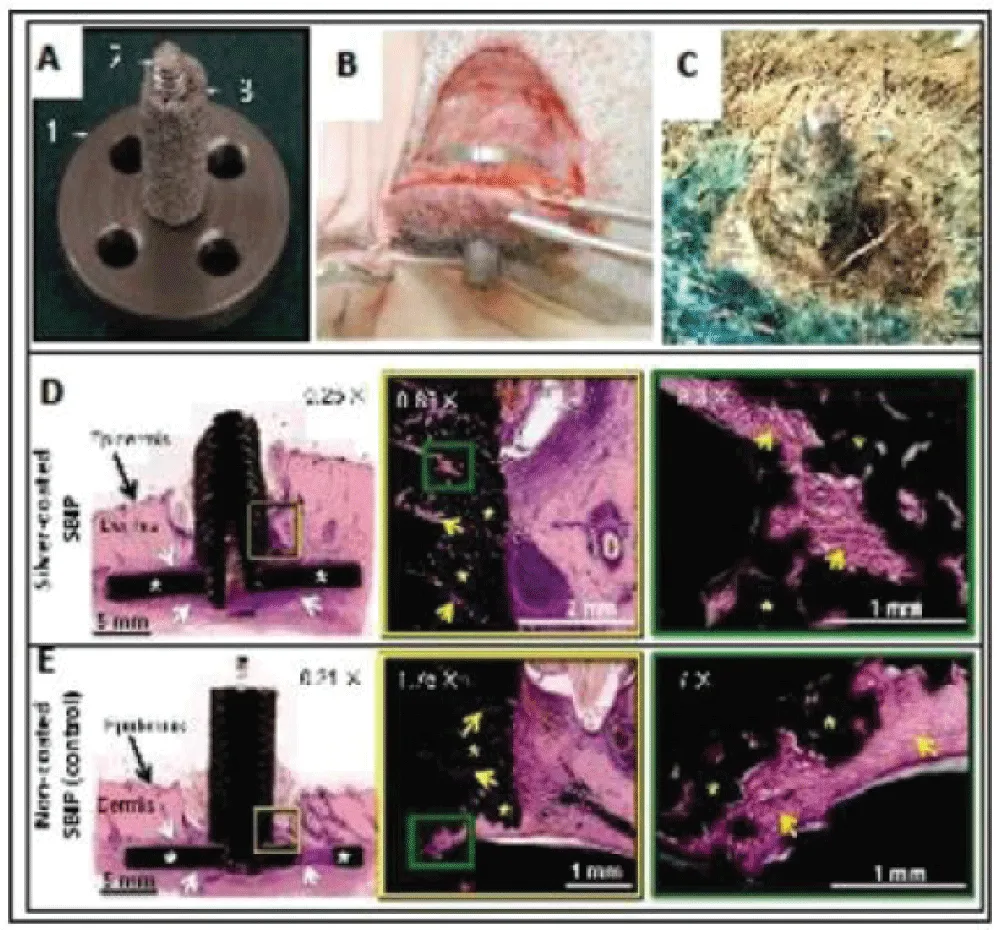
Even more important was considering this feature for skin regeneration in the circumference of the transcutaneous implant. Studies with SBIP showed infection-free ingrowth of skin tissues into the porous structure of the implant as demonstrated in Figure 9 [27]. That creates a skin seal, thus addressing the principal failure modes in existing percutaneous devices: skin regression, marsupialization, permigration, and avulsion.
Recent publications by other research groups also demonstrate growing interest in various applications of the phenomenon of natural tissues’ anisotropy [28-30].
Analysis of the basics of ossification in tube bones, as outlined in this paper, demonstrates the dependency on the direction of the anticipated remodeling. Among the four main directions analyzed, ossification toward the center of the medullary canal is the least effective. We hypothesize that the attachment of the implant should instead be based on ossification of the bone walls in the circular direction, thereby establishing natural “osseo-locks.” If proven, the recommendations presented in this paper for a potentially more biological method of in-bone implantation could be useful for total joint replacement and for other technologies based on device-bone bond.
Acknowledgements
This material was based on work supported in part by the National Institutes of Health (grant 1R43HD057492-01A1).
- Charnley J. Arthroplasty of the hip. A new operation. Lancet. 1961;1(7187):1129-1132. Available from: https://doi.org/10.1016/s0140-6736(61)92063-3
- National Institute of Arthritis and Musculoskeletal and Skin Diseases. Do many people have joints replaced? [Internet]. Bethesda (MD): National Institutes of Health; 2007 [cited Year Month Day]. Available from: http://www.niams.nih.gov/hi/topics/arthritis/jointrep.htm#joint3
- Karachalios T, Hartofilakidis G, Zacharakis N, Tsekoura M. A 12- to 18-year radiographic follow-up study of Charnley low-friction arthroplasty. The role of the center of rotation. Clin Orthop Relat Res. 1993;(296):140-147. Available from: https://pubmed.ncbi.nlm.nih.gov/8222417/
- Munger P, Roder C, Ackermann-Liebrich U, Busato A. Patient-related risk factors leading to aseptic stem loosening in total hip arthroplasty: a case-control study of 5,035 patients. Acta Orthop. 2006;77(4):567-574. Available from: https://doi.org/10.1080/17453670610012629
- Chao EY, Inoue N. Biophysical stimulation of bone fracture repair, regeneration and remodelling. Eur Cell Mater. 2003;6:72-84; discussion 84-85. Available from: https://storage.forummmpub.com/FMP/1968519109386801152/application/v006a07.pdf
- Khan K. Physical activity and bone health. Champaign (IL): Human Kinetics; 2001. Available from: https://catalog.nlm.nih.gov/discovery/fulldisplay?docid=alma9910838733406676&context=L&vid=01NLM_INST:01NLM_INST&lang=en&adaptor=Local%20Search%20Engine&tab=LibraryCatalog&query=lds56,contains,Bone%20Development%20--%20physiology,AND&mode=advanced&offset=0
- Malik MH, Jury F, Bayat A, Ollier WE, Kay PR. Genetic susceptibility to total hip arthroplasty failure: a preliminary study on the influence of matrix metalloproteinase 1, interleukin 6 polymorphisms and vitamin D receptor. Ann Rheum Dis. 2007;66(8):1116-1120. Available from: https://doi.org/10.1136/ard.2006.062018
- Editorial. How good are knee replacements? Lancet. 1991;338(8765):477-478.
- Prendergast PJ, Taylor D. Design of intramedullary prostheses to prevent bone loss: predictions based on damage-stimulated remodelling. J Biomed Eng. 1992;14(6):499-506. Available from:
- Reininga IH, Wagenmakers R, van den Akker-Scheek I, Stant AD, Groothoff JW, Bulstra SK, et al. Effectiveness of computer-navigated minimally invasive total hip surgery compared to conventional total hip arthroplasty: design of a randomized controlled trial. BMC Musculoskelet Disord. 2007;8:4. Available from: https://doi.org/10.1186/1471-2474-8-4
- Guyen O, Chen QS, Bejui-Hugues J, Berry DJ, An KN. Unconstrained tripolar hip implants: effect on hip stability. Clin Orthop Relat Res. 2007;455:202-208. Available from: https://doi.org/10.1097/01.blo.0000238796.59596.1f
- Nagasawa T. Microenvironmental niches in the bone marrow required for B-cell development. Nat Rev Immunol. 2006;6:107-116. Available from: https://doi.org/10.1038/nri1780
- He Y, Luo Y, Tang S, Rajantie I, Salven P, Heil M, Zhang R, et al. Critical function of Bmx/Etk in ischemia-mediated arteriogenesis and angiogenesis. J Clin Invest. 2006;116(9):2344-2355. Available from: https://doi.org/10.1172/jci28123
- Bowlby AA. Surgical pathology and morbid anatomy. London: J & A Churchill; 1895. p. 329. Available from: https://archive.org/details/surgicalpatholo01bowlgoog
- Ilizarov GA. The principles of the Ilizarov method. Bull Hosp Jt Dis Orthop Inst. 1988;48(1):1-11. Available from: https://pubmed.ncbi.nlm.nih.gov/2840141/
- Ilizarov GA. The tension-stress effect on the genesis and growth of tissues. Part I. The influence of stability of fixation and soft-tissue preservation. Clin Orthop Relat Res. 1989;(238):249-281. Available from: https://pubmed.ncbi.nlm.nih.gov/2910611/
- Pitkin M. In-bone implantable shaft for prosthetic joints or for direct skeletal attachment of external limb prostheses and method of its installation. US Patent US8992615B2; 2015. Available from: https://patents.google.com/patent/US8992615B2/en,2015
- Pitkin M. New method of fixation of in-bone implanted prosthesis. J Biomed Mater Res A. 2013;50(5):709-722.Available from: https://doi.org/10.1682/jrrd.2012.11.0202
- Zalavras CG, Singh A, Patzakis MJ. Novel technique for medullary canal debridement in tibia and femur osteomyelitis. Clin Orthop Relat Res. 2007;461:31-34. Available from: https://doi.org/10.1097/blo.0b013e318098673f
- Witso E, Kristensen T, Benum P, Sivertsen S, Persen L, Funderud A, et al. A. Improved comfort and function of arm prosthesis after implantation of a Humerus-T-Prosthesis in trans-humeral amputees. Prosthet Orthot Int. 2006;30(3):270-278. Available from: https://doi.org/10.1080/03093640600605013
- Eriksson E, Branemark PI. Osseointegration from the perspective of the plastic surgeon. Plast Reconstr Surg. 1994;93(3):626-637. Available from: https://pubmed.ncbi.nlm.nih.gov/8115525/
- Branemark R, Branemark PI, Rydevik B, Myers RR. Osseointegration in skeletal reconstruction and rehabilitation: a review. J Rehabil Res Dev. 2001;38(2):175-181. Available from: https://pubmed.ncbi.nlm.nih.gov/11392650/
- Pendegrass CJ, Goodship AE, Blunn GW. Development of a soft tissue seal around bone-anchored transcutaneous amputation prostheses. Biomaterials. 2006;27(23):4183-4191. Available from: https://doi.org/10.1016/j.biomaterials.2006.03.041
- Pitkin M, Raykhtsaum G. Skin integrated device. US Patent US8257435; 2012. Available from: https://patents.google.com/patent/US8257435B2/en
- Pitkin M. Distraction implantation: a new technique in total joint arthroplasty and direct skeletal attachment. EC Orthopaedics. 2018;9(5):285-292. Available from: https://pubmed.ncbi.nlm.nih.gov/30198026/
- Pitkin M. Addressing anisotropy of tissues regeneration in the implants design. Orthop Muscular Syst Curr Res. 2015. Available from: https://www.longdom.org/proceedings/addressing-anisotropy-of-tissues-regeneration-in-the-implants-design-28098.html
- Pitkin M, Cassidy C, Shevtsov MA, Jarrell JR, Park H, Farrell BJ, et aI. Recent progress in animal studies of the skin- and bone-integrated pylon with deep porosity for bone-anchored limb prosthetics with and without neural interface. Mil Med. 2021;186(Suppl 1):688-695. Available from: https://doi.org/10.1093/milmed/usaa445
- Samant V. Advancements in biomimetic orthopedic implants: bridging nature and technology for bone regeneration. In: Biomaterials in Orthopaedics & Trauma: Current Status and Future Trends in Revolutionizing Patient Care. Cham: Springer; 2025. p. 135-145.
- Wu YL, Huang LY, Liu L, Zhang ZM, Long SY, Ye L, et al. Biomimetically anisotropic hierarchical scaffold mediating stress transmission along the direction of force loading for rapid bone regeneration. Biomaterials. 2025;123824. Available from: https://doi.org/10.1016/j.biomaterials.2025.123824
- Das S, Juloori SM, Swarnakar M, Chowdhury MP, Dhara S. Mechano-stimuli-responsive engineered device mimicking native anisotropy towards tissue regeneration. RSC Sustainability. 2026. Available from: https://pubs.rsc.org/en/content/articlelanding/2026/su/d5su00448a



 Save to Mendeley
Article Alerts
Subscribe to our articles alerts and stay tuned.
 This work is licensed under a Creative Commons Attribution 4.0 International License.

