Plastic Bronchitis: A Case Report
1Department of Pediatrics, School of Medical Sciences, State University of Campinas, Cidade Universitária Zeferino Vaz, Barão Geraldo, Zip Code: 13083-887, Campinas, São Paulo, Brazil
2Centre for Research in Pediatrics (CIPED), School of Medical Sciences, State University of Campinas, Cidade Universitária Zeferino Vaz, Barão Geraldo, Zip Code: 13083-887, Campinas, São Paulo, Brazil
3Clinical Hospital of Sumaré, State University of Campinas, Av. da Amizade, 2,400, Jd. Bela Vista, Zip Code: 13175-49, Sumaré, São Paulo, Brazil
4Department of Medical Genetics, School of Medical Sciences, State University of Campinas, Cidade Universitária Zeferino Vaz, Barão Geraldo, Zip Code: 13083-887, Campinas, São Paulo, Brazil
Author and article information
Cite this as
Peixoto AO, Ribeiro JD, da Costa RM, Marson FAL (2017) Plastic Bronchitis: A Case Report. Glob J Allergy. 2017; 3(1): 22-26. Available from: 10.17352/2455-8141.000020
Copyright License
© 2017 Peixoto AO, et al. This is an open-access article distributed under the terms of the Creative Commons Attribution License, which permits unrestricted use, distribution, and reproduction in any medium, provided the original author and source are credited.Plastic bronchitis is a rare disease characterized by the formation of bronchial casts that can cause partial or complete obstruction of the airway. In this case report, a patient aged four years, previously healthy, began a chronic cough and underwent repeated courses of antibiotic therapy, inhaled corticosteroids and imaging tests; until there was a spontaneous sputum of a bronchial tree-shaped cast with approximately five cm, making possible the diagnosis of plastic bronchitis, which in our case report has idiopathic etiology. Due to the rarity of the pathology, we believe in the importance of the case report that can help to: (i) better understand the clinical presentation of plastic bronchitis; (ii) understand the difficulty in diagnosing the disease and distinguishing associated pathologies; (iii) disseminate the disease to health professionals; (iv) better understand the available therapies; (v) evaluate the efficacy of the disease treatment.
Plastic bronchitis is a rare disease characterized by the formation of extensive bronchial casts, which can be gelatinous or rigid. Bronchial casts represent the exact format of the airway from which they are removed by sputum or bronchoscopy, and they tend to be large and more cohesive than mucous plugs [1-11].
Plastic bronchitis can be commonly associated with cyanotic congenital heart diseases, secondary acute chest syndrome to sickle cell disease and diffuse hypersecretory bronchial disorders, such as asthma, cystic fibrosis, bronchopulmonary aspergillosis, bacterial or viral respiratory infections, in addition to reports on cases of heart failure and pericardial effusion [1-11].
Clinical observation
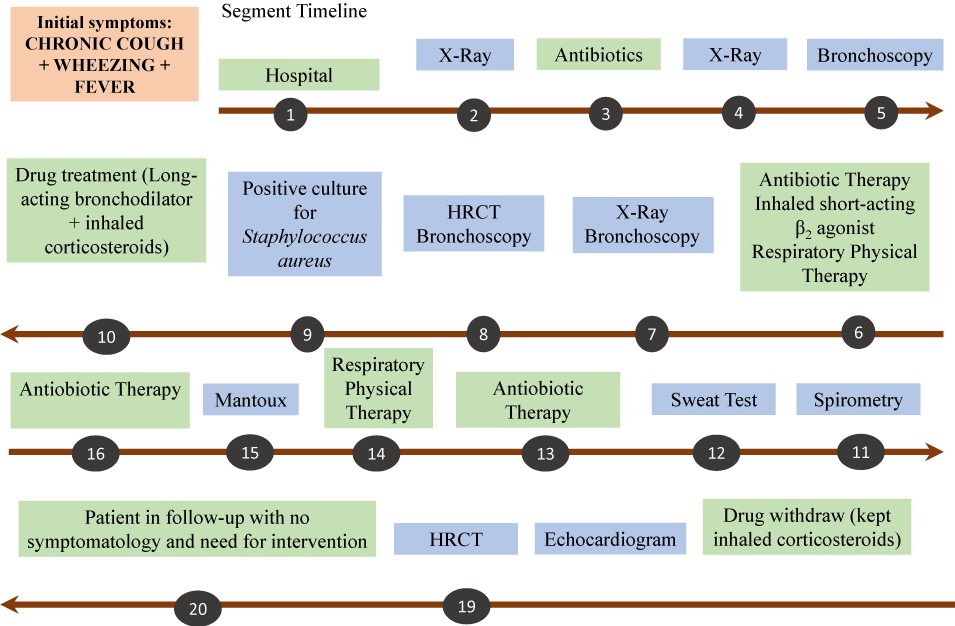
In our case report, a female patient, aged four years and six months, from the state of Minas Gerais, Brazil, was evaluated. The patient was healthy until the age of four years and three months, when she began a productive cough, accompanied by fever and wheezing, with no dyspnea. At that time, the presence of opacity in the left hemithorax was identified by the simple chest radiography and bronchopneumonia was diagnosed. The treatment of bronchopneumonia was held with the use of amoxicillin for 14 days, associated with N-acetylcysteine [C5H9NO3S]. After the treatment, there was partial improvement of the radiological image.
The patient remained symptom free during the two-week period after the treatment, when evolved, with ventilatory-dependent chest pain, with greater intensity in precordial region, associated with coughing and wheezing, but remaining afebrile. At that time, new chest X-rays showed left lobar atelectasis. Due to the clinical pattern, the patient was hospitalized to perform respiratory physical therapy, inhaled therapy with short-acting β2 agonist and antibiotic therapy for 12 days. Procedures were held at another hospital.
There was no radiological improvement with the interventions described, and bronchoscopy was indicated. The result of the first bronchoscopy showed no abnormalities. However, due to the present and constant radiological alteration, new bronchoscopy was indicated within 72 hours. In the second procedure, the presence of bronchial cast was evidenced, composed of amorphous, necrotic material and fibrinopurulent serous exudate. After the second bronchoscopy, the elimination of abundant secretion and bronchial cast (approximately five cm in length) were identified. Thereafter, the patient began to eliminate bronchial tree-shaped material after a cough crisis for a period of approximately one year.
Considering the possibility of plastic bronchitis diagnosis, the patient was referred to a Tertiary Hospital, for investigation, which included the analysis of underlying diseases.
In the Tertiary Hospital, a High-Resolution Computed Tomography of the chest was held, which showed:
(i) Total atelectasis of the left upper lobe, with volumetric reduction of the lung
(ii) Deviation of mediastinal structures to the left
(iii) Hilar prominence of difficult characterization to the left. For this reason, the radiology team indicated an exam with use of contrast.
The patient was submitted to rigid bronchoscopy in which bronchial casts or anatomical changes to lung segments on the left and right were not observed. However, it was identified high amount of whitish and thick secretion on the left. In the collection of bronchoalveolar lavage, the Staphylococcus aureus sensitive to oxacillin was identified in the routine diagnostic culture. In addition to the bacterial examination, analyses were performed for fungi and mycobacteria culture, and all the tests were negative.
After two months, a High-Resolution Computed Tomography of the chest with contrast was held. In the exam, atelectasis of the anterior segment of the left upper lobe and lingula was identified in the pulmonary parenchyma and was associated with bronchiectasis and parenchymal bands.
Since clinical symptoms persisted, the investigation of differential diagnosis or diseases known to underlie plastic bronchitis proceeded, which included the diagnostic analysis for:
I. Cystic fibrosis (determination of chloride ion concentration by the sweat test)
II. Allergic asthma [determination of immunoglobulin E (IgE), eosinophils and lung function performed by spirometry with bronchodilator therapy]
III. Tuberculosis (assessment by Mantoux test)
IV. Cardiopathy (assessed by echocardiography). However, there was normality in the examinations held for the diagnosis of underlying diseases.
In addition to the courses of antibiotic therapy that the patient received during the evolution of the disease, the use of long-acting inhaled corticosteroid and bronchodilator was indicated, due to the apparent possibility of asthma. A year after the procedures were held, the patient stopped presenting cough with mucus, and evolved without symptoms, although the etiology of plastic bronchitis has not been elucidated in the case.
Five years after the first scan, a new image exam was held, and it was noted:
(i) Pulmonary parenchyma with no changes
(ii) topography of the left lower lobe and lingula with discreet dilatation
(iii) Sparse bronchiectasis to the left. In addition, the evidence of pulmonary function remained within the normal range.
After the procedures, the patient continues to be accompanied at the Tertiary Hospital with no further complications and need for drug therapy.
The summary of the tests and its results are described in figure 1.
Discussion
In the scientific literature, the prevalence of plastic bronchitis is unknown, arising mainly from the misdiagnosis in most patients [12,13]. In addition, the knowledge of the disease is based primarily on case reports [3,6-8,12,14-23] and the diagnosis of plastic bronchitis is often held during an autopsy after death by respiratory failure [13]. The disease affects all age groups, with a predominance of cases in women [12], a fact not yet clarified in the literature.
The main characteristic of plastic bronchitis is the formation and expectoration of bronchial casts, which can vary in sizes, from small segments up to larger sizes capable of obstructing the airway of an entire lung. Bronchial casts consist of varying proportions of fibrin, mucin and cellular material. The sputum of bronchial casts varies in frequency and duration, and may occur hemoptysis [12].
In some cases of plastic bronchitis occurs spontaneous elimination of bronchial cast, which can complicate and delay the diagnosis. However, in our case report, the patient showed spontaneous elimination of bronchial cast that lasted for about a year.
The clinical pattern of the disease presents wide variability. However, chronic cough and dyspnea are usually observed, being wheezing the most common finding of physical examination. Radiological examination often identifies the location of the bronchial impaction, with atelectasis or infiltrators, predominantly in lower lobes [12]. Plastic bronchitis can present mild medical conditions with clinical recovery, as in our case report. However, in severe cases, airway obstruction and severe atelectasis can occur, leading to respiratory failure [12,13].
The High-Resolution Computed Tomography allow, in some cases, the visualization of bronchial casts in the airways of larger caliber. However, the diagnosis is usually confirmed by bronchoscopy for demonstrating the airway obstruction by bronchial cast [12].
Plastic bronchitis classification in literature is still controversial and previous studies were based on a series of cases, presenting methodological limitations [2,23,24]. Therefore, classifications are based on histological type and associated diseases. Namely:
a)histological classification:
(i) Type 1 – inflammatory (cellular)
(ii) Type 2 (acellular)
b)Classification by underlying disease to plastic bronchitis:
(i) Allergy/Asthma
(ii) Cardiac
(iii) Idiopathic [2,23,24].
Interestingly, on the histological classification, type 1 casts are associated with, primarily, the pathologies affecting the bronchial tubes (i.e., asthma and allergy); whereas type 2 casts are associated with congenital cyanotic heart disease and idiopathic plastic bronchitis cases. The ratings present therapeutic value or limited prognosis [13].
Diseases probably associated with plastic bronchitis are briefly presented in table 1. However, cardiac changes and pulmonary interaction that result in plastic bronchitis are not well known, but they can be associated with abnormalities in the tissue factor [13]. Moreover, it should be considered that, recently, plastic bronchitis can be triggered by common respiratory infections and cause atelectasis, even in healthy children [6].
The assessment of treatment response in plastic bronchitis is restricted, considering that the disease is rare and the patients received different medications, being difficult to determine which therapy was effective [13].
The treatment of plastic bronchitis includes acute therapy to assist the removal and expectoration of bronchial casts and short or long-term treatments that address the hypersecretory process [12]. However, if plastic bronchitis can be a complication of an underlying disease, the underlying condition must be treated to eliminate the formation of bronchial casts.
Drugs used for treating plastic bronchitis present low scientific evidence. In short, for the different drugs already used, we have the following conclusions, mainly, obtained in the consensus of the European Respiratory Society (ERS) (2013) [13] and in the international registry data of plastic bronchitis (Table 2) [12,13,15,16,25-27]:
I. Antibiotics: Plastic bronchitis is not associated with bacterial infection and, in general, antibiotics are not recommended in the treatment. However, low-dose macrolides can decrease the amount of mucin by inhibiting the production of extracellular signal-regulated kinases (ERKs). The low-dose macrolides can mitigate the severity of plastic bronchitis, similar to the use in cystic fibrosis and diffuse panbronchiolitis.
II. Expectorants: Expectorants, such as guaifenesin, hypertonic saline solution or mucolytics (N-acetylcysteine), may induce mucus secretion and/or increase the airway inflammation and must be used with caution, since the clinical benefit is still limited.
III. Short-acting β2 agonists and inhaled corticosteroids: no apparent benefit.
IV. Dornase alpha: No apparent benefit, since bronchial cast does not contain polymeric DNA.
V. Inhalation of tissue plasminogen activator (tPA): Can ease symptoms through fibrin depolymerization. However, the drug presents a high cost and can cause airway irritability.
VI. Inhaled heparin: It acts by reducing mucin secretion and prevents the activation of the fibrin tissue factor, besides presenting anti-inflammatory action, has lower cost and causes less irritation than tPA.
VII. Additional Factors: In the diagnosis of plastic bronchitis, the routine with the daily use of a High-Frequency Chest Compression (HFCC) vest in patients with effective cough must be initiated, or the use of the Cough Assist device (Philips Respironics®, France) in patients with ineffective cough.
From the physiological and genetic point of view, plastic bronchitis is little understood and studies have been conducted to understand these factors and allow a better characterization of the pathology [13]. However, as evidenced by Rüegger et al. (2013), in monozygotic twins, the genetic contribution must be considered and, in the future, the genetics in response to the environmental factor may show the real etiology in the formation of the bronchial casts [6].
Conclusion
Plastic bronchitis is not part of the routine care, even in specialty centers for pneumology, being a challenge in clinical practice the diagnosis and follow-up of patients with the disease. This is a phenotype unknown by many doctors, even in the specialty of pneumology. Hence, case reports become important to gradually promote the understanding of the disease and make a proper management of the patient, with improvement in the quality of life. The management of the most severe cases of the disease, which can evolve with great worsening of pulmonary function, can be evaluated and carried out regarding the knowledge achieved in the previous published case reports.
Acknowledgment
Luciana Montes Rezende, Stéphanie Villa-Nova Pereira, Carmen Sílvia Bertuzzo, Luciana Cardoso Bonadia, Maria Ângela Gonçalves de Oliveira Ribeiro, Maria de Fátima Corrêa Pimenta Servidoni, Carlos Emílio Levy, Adyléia Aparecida Dalbo Contrera Toro, Renan Mauch, Roberto José Negrão Nogueira, Eulália Sakano, Antônio Fernando Ribeiro, Natasha Matsunaga, Alfonso Eduardo Alvarez, Carla Cristina de Souza Gomez, Elizete Aparecida Lomazi, Paloma Lopes Francisco Parazzi, Larissa Lazzarini Furlan, Emília Gonçalves, Aline Gonçalves, Milena Baptistella Grotta Silva and Alethea Guimarães Faria who contribute for the studies conducted in our reference center. Espaço da Escrita project/General Coordination of Unicamp for the English translation of this article.
Contributorship
AOP, JDR, RMC and FALM made substantial contributions to data acquisition; were involved in drafting the manuscript and revising it critically for important intellectual content; gave final approval of the manuscript version to be published; and agreed to be accountable for all aspects of the work in ensuring that questions related to the accuracy or integrity of any part of the work were appropriately investigated and resolved.
Name and location of the institution where the study was performed: State University of Campinas, Campinas, São Paulo, Brazil.
São Paulo Research Foundation (FAPESP) for research support and scholarships (#2011/12939-4, #2011/18845-1, #2015/12183-8 and #2015/12858-5 to FALM and JDR); Fundo de Apoio à Pesquisa, ao Ensino e à Extensão of the State University of Campinas for research support (#0648/2015 to FALM).
- Liston SL, Port D, Siegel LG (1986) Plastic bronchitis. Laryngoscope 96: 1347-1351. Link: https://goo.gl/J5fiVH
- Madsen P, Shah SA, Rubin BK (2005) Plastic bronchitis: new insights and a classification scheme. Paediatr Respir Rev 6: 292-300. Link: https://goo.gl/EvBHc6
- Brogan TV, Finn LS, Pyskaty DJ Jr, Redding GJ, Ricker D, et al. (2002) Plastic bronchitis in children: a case series and review of the medical literature. Pediatr Pulmonol 34: 482-487. Link: https://goo.gl/xJp6Lj
- Bowen A, Oudjhane K, Odagiri K, Liston SL, Cumming WA, et al. (1985) Plastic bronchitis: large, branching, mucoid bronchial casts in children. AJR Am J Roentgenol 144: 371-375. Link: https://goo.gl/u9ru43
- Park JY, Elshami AA, Kang DS, Jung TH (1996) Plastic bronchitis. Eur Respir J 9: 612-614. Link: https://goo.gl/y7Yry6
- Rüegger CM, Bär W, Iseli P (2013) Simultaneous atelectasis in human bocavirus infected monozygotic twins: was it plastic bronchitis? BMC Pediatr 13: 209. Link: https://goo.gl/5zBNMh
- Kim EJ, Park JE, Kim DH, Lee J, Plastic bronchitis in an adult with asthma. Tuberc Respir Dis (Seoul) 73. Link: https://goo.gl/hxShLc
- Kim S, Cho HJ, Han DK, Choi YD, Yang ES, et al. (2012) Recurrent plastic bronchitis in a child with 2009 influenza A (H1N1) and influenza B virus infection. J Korean Med Sci 27:1114-1119. Link: https://goo.gl/WVzHoc
- Feray S, Mora P, Decavele M, Pham T, Hafiani EM, et al. (2017) Plastic bronchitis. An unusual complication of acute chest syndrome in adult. Respir Med Case Rep 21: 93-95. Link: https://goo.gl/X8Ds6P
- Salamone I, Mondello B, Lucanto MC, Cristadoro S, Lombardo M, et al. (2017) Bronchial tree-shaped mucous plug in cystic fibrosis: imaging-guided management. Respirol Case Rep 5: e00214. Link: https://goo.gl/UrxXED
- Panchabhai TS, Mukhopadhyay S, Sehgal S, Bandyopadhyay D, Erzurum SC, et al. (2016) Plugs of the air passages: a clinicopathologic review. Chest 150: 1141-1157. Link: https://goo.gl/Ni4PDS
- Eberlein MH, Drummond MB, Haponik EF (2008) Plastic bronchitis: a management challenge. Am J Med Sci 335: 163-169. Link: https://goo.gl/gn6sym
- Rubin BK, Moskowitz WB (2013) 1st European Respiratory Society Handbook: Paediatric Respiratory Medicine. Plastic bronchitis. 577-581.
- Méndez Abad P, Delgado Pecellín I, González Valencia JP (2015) Idiopathic plastic bronchitis as an uncommon cause of massive pulmonary atelectasis. Arch Bronconeumol 51: 46-47. Link: https://goo.gl/DoBvJG
- Colaneri M, Quarti A, Pozzi M, Gasparini S, Carloni I, et al. (2014) Management of plastic bronchitis with nebulized tissue plasminogen activator: another brick in the wall. Ital J Pediatr 40: 18. Link: https://goo.gl/V93HDL
- Lis G, Cichocka-Jarosz E, Jedynak-Wasowicz U, Glowacka E (2014) Add-on treatment with nebulized hypertonic saline in a child with plastic bronchitis after the Glenn procedure. J Bras Pneumol 40: 82-85. Link: https://goo.gl/C6av4U
- Shah A, Donovan J, Marino P, Shah PL, Devaraj A, et al. (2017) A lesson in plasticity: a 74-year-old man with plastic bronchitis. Thorax Link: https://goo.gl/4bXezH
- Blanco Pérez JJ, Arnalich Montiel V, Guerra Vales JL (2017) Plastic bronchitis in a patient with silicosis. Arch Bronconeumol Link: https://goo.gl/rr1J26
- Parent JJ, Darragh RK, Gossett JG, Ryan TD, Villa CR, et al. (2017) Strategies to prevent cast formation in patients with plastic bronchitis undergoing heart transplantation. Pediatr Cardiol Link: https://goo.gl/zvtBzY
- Garcia-Henriquez N, Toloza EM, Khalil F, Echavarria MF, Garrett JR, et al. (2016) Extensive plastic bronchitis: etiology of a rare condition. J Thorac Dis 8: E961-E965. Link: https://goo.gl/gNTWeF
- Zhang J, Kang X (2015) Plastic bronchitis associated with influenza virus infection in children: a report on 14 cases. Int J Pediatr Otorhinolaryngol 79: 481-486. Link: https://goo.gl/zzQWe1
- Turgut T, In E, Özercan IH, Kaplan M (2014) A case of plastic bronchitis. Arch Iran Med 17: 589-590. Link: https://goo.gl/VbkysT
- Singhi AK, Vinoth B, Kuruvilla S, Sivakumar K (2015) Plastic bronchitis. Ann Pediatr Cardiol. 8: 246-248. Link: https://goo.gl/XhCs9p
- Seear M, Hui H, Magee F (1997) Bronchial casts in children: a proposed classification based on nine cases and a review of the literature. Am J Respir Crit Care Med 155: 364-370. Link: https://goo.gl/KqR7VE
- International plastic bronchitis registry. Link: https://goo.gl/oSxGKV
- Pérez Ruiz E, López Castillo MC, Caro Aguilera P, Pérez Frías J (2017) Management and treatment of pediatric plastic bronchitis. Arch Bronconeumol 53: 467-468 Link: https://goo.gl/BYWRif
- Robinson M, Smiley M, Kotha K, Udoji T (2016) Plastic bronchitis treated with topical tissue-type plasminogen activator and cryotherapy. Clin Pediatr (Phila) 55: 1171-1175. Link: https://goo.gl/BMvkHc



 Save to Mendeley
Article Alerts
Subscribe to our articles alerts and stay tuned.
 This work is licensed under a Creative Commons Attribution 4.0 International License.

